 Supports—and Information—for Parents during Covid-19:
(Last updated: 29th March 2021.)
This is a very difficult time for everyone. Each family is facing many different challenges. We hope something below will help you — or one of your friends or family. There are three sections to this page:
- Supports for Parents — taking care of yourself, relaxation, meditation, managing worries, managing children… various support line phone numbers
- Information for Parents — accurate Covid information, facts, and advice
- How Can We Stop Covid Spreading — the different things that work
IMPORTANT: Do Not Forget to Keep Looking at the Home Page for the School’s Most Recent News For You…
(1) Supports for Parents…
- Take Care of Yourself, Your Own Mental Health. You’ve got to! Just like on an airplane where they tell adults to put on their own oxygen mask first: if you don’t mind yourself you can’t mind your child. Here are some good ways of doing that:
- The HSE have a big list of great ‘mental health supports and services‘. They update it all the time. It includes ‘Online Counselling & Supports’, ‘Phone, Email, & Text Supports’, ‘Supports for Older People’, and Apps to help us manage our anxiety. Really worth checking out.
- (NEW) free-of-charge online counselling from mymind.org under the Covid-19 project until the 31st of March.
- Relaxation/Meditation: The HSE has promoted the free courses on StressControl.org. Its relaxation exercises focus on giving you back control. You don’t have to register or log in to do the courses. Also,
- Do you worry much? Try the idea of having a certain time of the day as your worry time, and if a worry comes into your head before that, say to yourself “I’ll worry about that later at…”. There’s a really good video about how to do this; find it at the bottom of this BBC article; look for the video called ‘How to Manager Your Worries.’ …. The video and the tips in it have helped many children at Talbot.
- Does your child worry too much or is she/he feeling down? Here’s a new and Irish short course for you to help your child with, ‘At Home with Weaving Well-being‘ by Fiona Forman. It’s based on powerful ‘positive psychology’. It’s very like courses we teach in Talbot. We strongly recommend it.
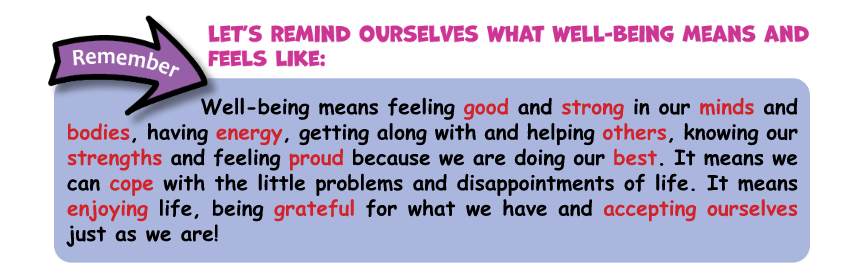 You could also help your child feel better by getting answers to these questions.
 - Mental Health advice from the HSE called ‘Minding your mental health during the coronavirus outbreak’
- This link is to 13 Small Decisions You Can Take To Ease Your Anxiety, which contains a lot that can help (from Psychology Today magazine)
- And here is a full list of supports linked to from the HSE for all possible health issues, not just mental health.
- Finally, sleep: Many of us have had problems with sleep. If you are having problems sleeping, read this from the HSE.
- (Remember: we’ve put some ‘old-but-good info‘ onto a new page, such as amazing tips for managing isolation)
- Is your child challenging you about household rules to keep you all safe?
- If your child is fighting with you to meet up with friends, consider showing him/her this 90-second video from RTE News.
- For older children and adults, you could show them this 2-minute clip from an Intensive Care Doctor, who explains how this is WAY more serious than the flu. It’s now had 16 million views.
- Here is a 10-second video with no talk that shows how Social Distancing works to protect everyone around us once we make sure we don’t get it.
- Information on covid for children:
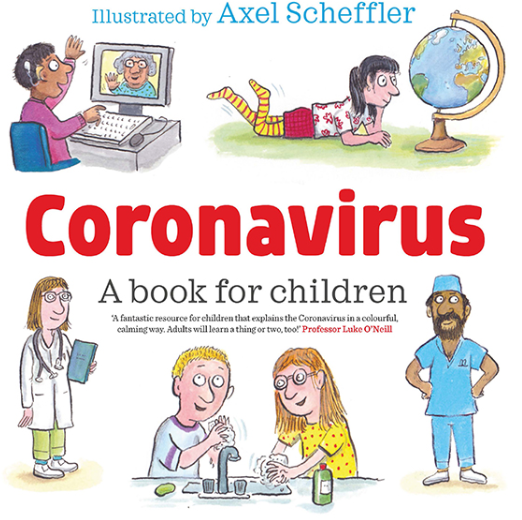
- There’s a short attractive 15-page book, for free as a pdf, ‘Coronavirus: A Book for Children’, for you to read with 5 to 9 year olds, by the illustrator of The Gruffalo and a few medical experts.
- And here is a cute video of an Italian boy explaining covid for very young children.
- There’s a short attractive 15-page book, for free as a pdf, ‘Coronavirus: A Book for Children’, for you to read with 5 to 9 year olds, by the illustrator of The Gruffalo and a few medical experts.
- Teach them how to wash their hands properly: You might want to show them why we need to with this RTE video. Then here’s a simple poster you can show your children, or you can ‘have fun’ together trying to see which of you can best copy the steps in this video from the W.H.O., or your child might like to watch this video of a primary school girl teaching us how to wash hands. (BIG TIP) Careful: recent Irish research shows most of us need to wash our fingertips and nails better than we do!
- Trouble getting the children into a routine? Here’s a guide prepared by NEPS, the education psychologist experts for the country. It’s full of wisdom.
- (NEW) NEPS have lots of other supports to help parents help children, now as a mix of videos and text.
- Want guidance for your older children or teenagers?
- Here’s help for teenagers from the government for while schools are closed, written by NEPS, the education psychologist experts.
- And here is BRILLIANT advice for them from UNESCO to help them protect their mental health during covid-19.
- If your teenager is feeling a little overwhelmed and finding it hard to adjust to all this, give ‘Let’s Self-Regulate‘ to them. It’s new, it’s short, it’s excellent. Written by Irish experts.
- Want help with managing the different devices?
- This site is the place for you to learn how to place Parental Controls on all sorts of electronic devices. You can also learn how to do this from the e-Safety Commissioner in Australia.
- (new) Ireland’s own Webwise.ie offers you free expertise and tips from parents on managing screen time, image-sharing, and general tips so that you stay in control.
- Resources to help your child learn… (more on our ‘old-but-good info’ page)
- Quality Home Learning Websites: Ms Byrne posted a selection of the top websites to help parents and children with home learning. Hours and hours of fun and learning there. And another site is helpmykidlearn.ie
- Try out the revamped KIDS-Fun page on this, our own site. Whatever your child is interested in, we hope you’ll find at least a few things there for them.
- Ideas from Talbot’s own kids that students shared in March, April, and early May 2020.
- RTE Home School Hub: RTE’s daily TV show for children learning at home, along with a helpful website. You can view lots of lessons, sorted by class level (1st/2nd class lessons) (3rd/4th class lessons), (5th/6th class lessons). RTE offers much more, too, including different types of podcasts for your children.
- The PDST (paid for by your taxes) have just begun a series of newsletters for parents to help your child with English, mostly focused on better speaking and listening. Everything they produce is quality.
- Reading is always a pleasure, but it can be hard to find the right book. No longer: Tumblebooks (free if you go through the South Dublin County library system, here) and Audible are the answer. Audible is free while schools are closed, and has some famous actors reading out loud brilliant children’s books.
- Exercise: don’t forget it: the children get lots of it during a typical school day, with PE and yard and basketball and swimming and so on. It has a really calming effect on so many. On rainy days, many classes use the popular gonoodle website. Give it a go… and of course, also fun, there’s PE with Joe Wicks, where you get fitter, a fun half-hour at a time.
- Food: your child has learned about Food Dudes. It’s a programme to encourage being kind to the body by eating well. They now have a ‘Fun at Home’ programme and an ‘Eat-A-Rainbow’ idea.
- Remember, we’ve more resources to help your child learn on our old-but-good info page.
- Have you enough ideas to help manage your child or children during this time?
- In March and April 2020 we collected students’ own ideas for other kids and then shared them on this website.
- Remember too the KIDS page on this site for lots of learning ideas and websites, and the notice to children on the covid-19 page of this website, where we give an example of a good routine that children could get into for each day so that days are less stressful and more filled with things they like.
- Remember, we’ve more on our old-but-good info page, such as “5 Tips for Getting Your Child To Engage with Schoolwork During Covid-19”
- Are you in the ‘vulnerable’ category or caring for someone over 70 years of age? South Dublin County Council now have a helpline and email-line for you/them, leading the various community supports… 1800 240 519 and covidsupport@sdublincoco.ie.
- We all know people who lost their jobs due to covid. Here are links to some of the most relevant government websites:
- The ‘Home Page for ALL government services
- The government’s Social Welfare Advice home page
- Phone-line and hours for the Department of Welfare (01 248 1398, 9am to 5pm)
- The Citizens Information page (it’s now focused on helping people affected by covid-19)
- If it all feels just a bit too much at any stage, as well as all the supports above, there’s also
- Barnardo’s Helpline 1800 910 123 for parents, 10am to 2pm, Mon-Fri, and
- ParentLine, 1890 927 277 Mon-Thurs 10-9, and Friday 10-4, and (new) Saturdays and Sundays 10-2. ParentLine have compiled helpful answers here to the questions they get asked about most often.
- Samaritans at 116 123. You can call them for free anytime day or night.

(2) Information for Parents…
- The government’s Covid-19 home page.
- The latest updates on Covid 19 from the government.
- The government’s all-in-one health-advice web page: it is updated just about every day.
- The very latest most important information for Ireland–from Citizens Information Twitter account.
- Sources of Accurate Information on Covid: (For more see our old-but-good info page)
- Good ADVICE from IRELAND’s HSE . They also have a ‘HSE Live’ Twitter account.
- A super Question-and-Answer webpage from Harvard University’s Medical School (really clear language, no jargon). They also have a page for parents with regularly-updated advice about playdates, social distancing, and healthy behaviours to help prevent infection.
- FACTS from IRELAND’S HSPC (Health Surveillance Protection Centre), including (new) a ‘Data Hub’ so you can look at Bawnogue and other areas and see how many cases there have been in each area.
- RTE, the national broadcaster: For reliable news, please use reliable sources: There has been a lot of wrong information on social media.
- How should we talk to our children about Covid-19? (See our old-but-good info page)
(3) How Can We Stop Covid Spreading?
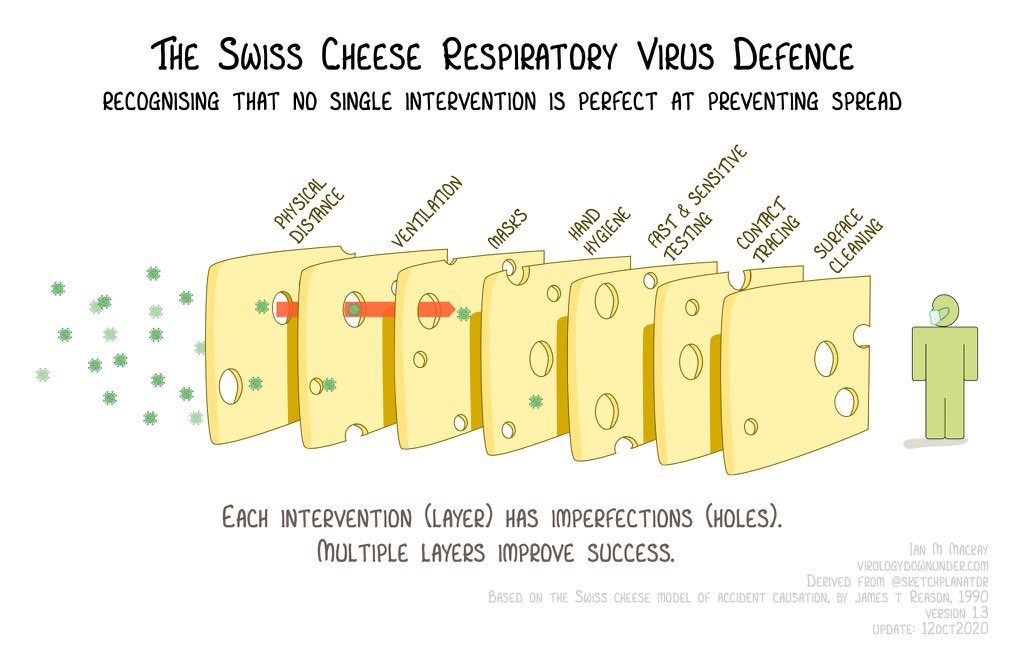
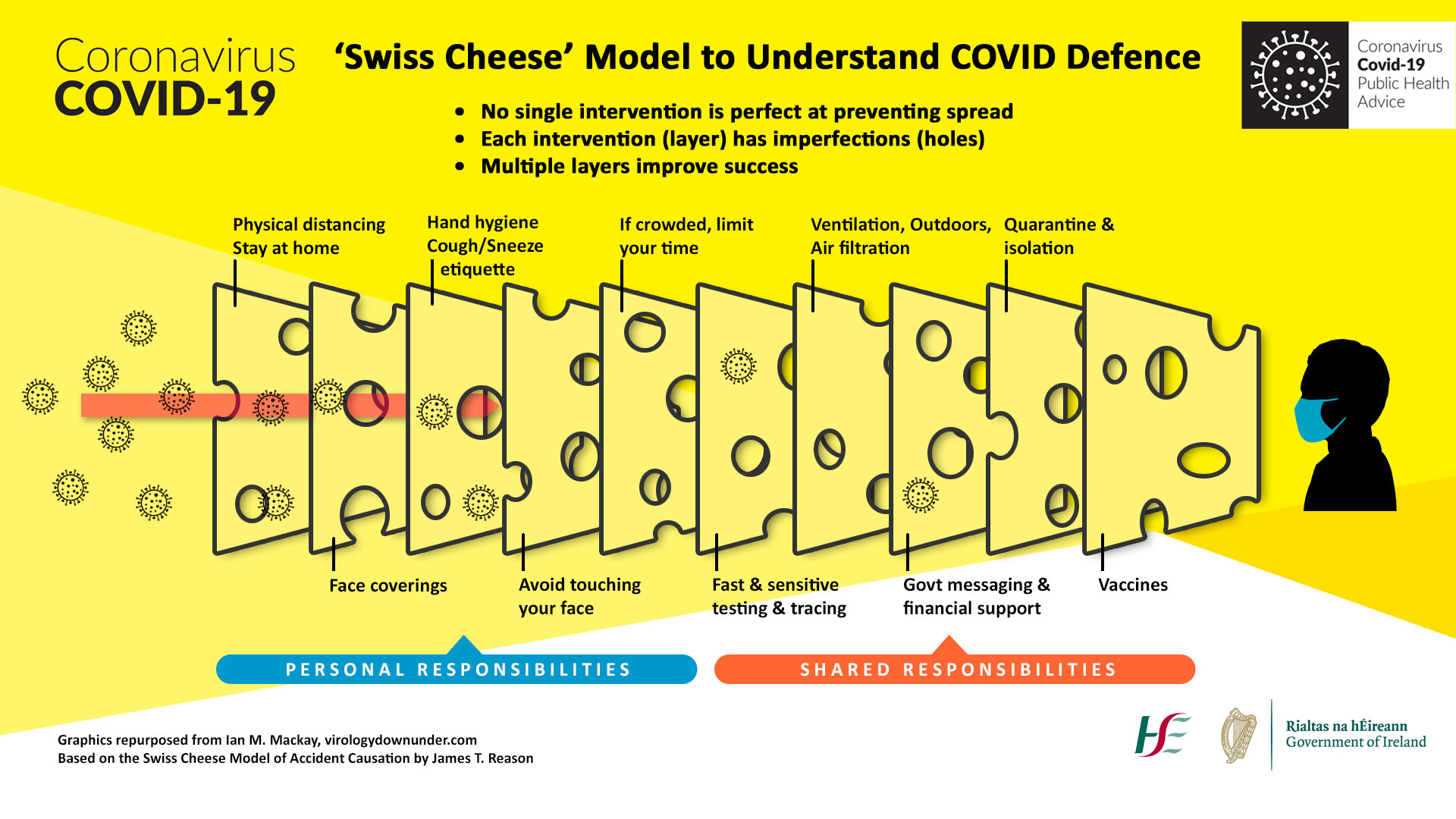
- How can we stop Covid spreading?
- As much as practical, stay at home! Like Tom Hanks tweeted: “Sheltering in place works like this: You don’t give it to anyone — You don’t get it from anyone. Common sense, no? Going to take awhile, but if we take care of each other, help where we can, and give up some comforts…this, too, shall pass. We can figure this out.”
- Ventilate: Ventilate any rooms you use!
- Orla Hegarty of UCD has been sharing the science on this and the data from other countries through her Twitter account (well worth following). If a room isn’t well ventilated the virus can build up and spread.
- Read this — great pictures — article from El Pais (English version) which shows us exactly how quickly and easily the virus spreads through the air.
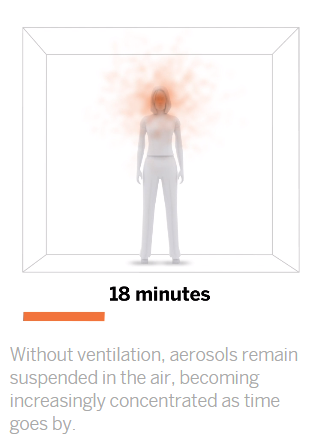
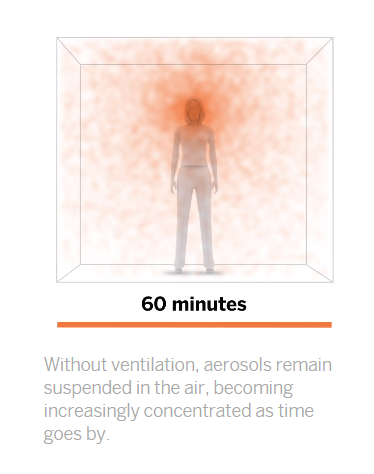
- Social Distancing–by everyone. When we have to go out, we MUST stay AT LEAST 2 metres from others (200 centimetres); and try and touch nothing, and wash our hands as soon as we can whenever we touch something outside the house and IMMEDIATELY we come back home before we touch anything (don’t forget: people often don’t clean their finger tips and nails right). Remember though, there is no safe distance if you are indoors and the room is poorly ventilated.
- Clean! Clean our hands, clear surfaces. Also we all need to be good at NOT touching our face with our hands (use a tissue if itchy, or like some experts suggest, do something else instead of scratching like sitting on the hands). Clean any surfaces that might have been touched by someone who might be infected; Remember, heavy loads of the virus can last up to 72 hours (3 days) on plastic surfaces.
- Download the Covid Tracker App
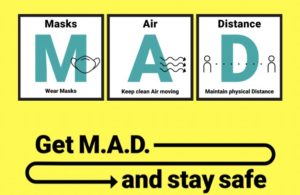
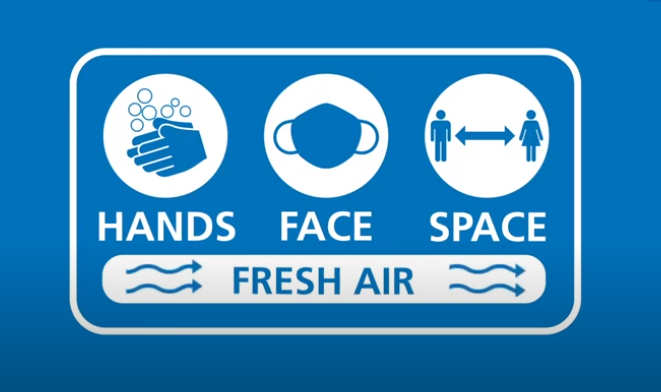
- What we all need to do is summarised in this poster.
- If you become infected, please isolate yourself quickly, and seek medical assistance by phone. The HSE’s instructions (as at 29th March 2021) are here, including a helpful list of Do’s and Don’t’s.
We at Talbot hope and pray that we all continue to work together to minimise how many people are infected and suffer. Let’s also remember the truth and wisdom of the saying: “This too will pass.” We wish you well and we look forward to seeing everyone again as soon as possible.
(Above Supports and Information first entered 12th March 2020, and regularly updated since then. If you can’t find something you found on this page in the past, it could be here)
Older Posts for Parents (non-Covid-19) are below…
Internet Safety Survey
In this new school year, 2019–2020, please ask your child this question every day…

When you ask this question, you are helping your child. You are showing your child you are interested. And, by answering it, your child’s learning deepens. They have to use their brain to remember what they learned. They have to use their brain to put words on what they learned. And they have to use their brain to summarise what they learned in a clear manner.
Please do not accept a “I don’t know!”… Day by day, encourage them to tell you a little bit more (or a little bit better). And know that you are helping them learn.
Homework 2019–2020
Parents/Guardians, a few key things for you…
- We are trying to boost enjoyment, reduce stress, and boost learning. We do surveys each year and we are improving—but not yet enough.
- You can see our Homework Policy on this website. Just click on the Policies tab above.
- There are Time Limits for homework—this means that your child does NOT have to work more than 30–40 minutes for one day’s homework in 3rd/4th class or 40–50 minutes in 5th/6th class.
- Teachers are all trying to improve how they give and manage homework. This includes giving homework for the week rather than for the next day (parents and children voiced strong support for this idea in our surveys and focus groups), giving more and more choice, differentiating/personalising homework more and more, using Menus of Ideas created by teachers and children for homework assignments which include ideas like exercise, drawing, play(!), learning logs, more music, gardening, and much much more.
- We would love ideas from parents for homework, maybe listed by subject, maybe not! Contact the class teacher and/or Mr Stuart.
- You have a key role in homework…
- Praise EFFORT (NOT ABILITY… research has made it clear now that praising a child’s ability actually harms that child as they will tend not to try as hard when they come up against something difficult. Meanwhile the child who is praised for effort, for keeping going, for progress/improvements, for strategies, and so on, WILL try hard when they come up against something difficult—and will end up by learning more). Here’s some examples…
- “That was a hard piece of work and you stuck to it and got it done. You stayed at your desk, kept up your concentration, and kept working. That’s brilliant!”
- “You really studied hard and I can see the improvement. You read the text two times and made sure you understood what you were reading. That really worked!”
- “I like that you took on that challenge. You’re going to learn a lot of great things.”
- “All right, that was too easy for you. Next time, let’s choose something more challenging that you can learn from.”
- “I liked the effort you put in.”
- Praise EFFORT (NOT ABILITY… research has made it clear now that praising a child’s ability actually harms that child as they will tend not to try as hard when they come up against something difficult. Meanwhile the child who is praised for effort, for keeping going, for progress/improvements, for strategies, and so on, WILL try hard when they come up against something difficult—and will end up by learning more). Here’s some examples…
- If your child has difficulties with homework, especially if it’s a pattern, then please please please tell the teacher. Maybe the work is too hard, maybe this, maybe that… whatever the issue is, let’s work together to resolve it. We don’t want your child stressed, we don’t want you stressed either!
- Similarly, if the work is too easy repeatedly—tell us! We want each child to be challenged a little so that they can learn something from the work.
- Encourage a positive attitude to homework. Tell them how proud you are of them for working so hard every day at it (it’s the truth, after all), how you see them progressing, how it’s the way to learn, and… “The harder you work, the smarter you get.”
- Finally, don’t forget, every day remember to ask “What did you learn today?” It’s a really good revision exercise for the child. Do this every day and your child will expect to be asked and will even begin to prepare answers for you. The more times you ask, the more your child will learn.
New Classes for Parents 2019
Dear Parents/Guardians/Grandparents, We have some new courses beginning this January, 2019. Please ask if you have any more questions or call in to see me! Looking forward to seeing you! Caitríona Ní Dhúill HSCL
- Internet Safety Talk – Are you worried about your childs online activities? Would you like to learn more about how to keep your child safe? Please join us in the school hall on Tuesday the 29th of January for ONE Morning ONLY.
- YOGA for EVERYONE! No experience necessary! Would you like to sleep better? Have more energy? Feel stronger? Why don’t you join us for our new YOGA class? (takes place in the School Hall) Fridays 9:15am – 10:15am starting January 25th (8 weeks)
- Walking Group! Interested in getting fit in a fun, social setting??? We are starting a walking group. We will have walks every Wednesday for around 45 minutes for 5 weeks. We will meet at the front of the Junior School at 9:10 on Wednesday 23rd January.
- Want to Improve your Knitting Skills? This class is open to all and is ongoing and you are free to join at any time. Thursdays at 9.30am – 11:30am (in the prefabs) All Welcome!
News: October 2018: We have a new homework policy! It has made a number of positive changes to how we do homework at Talbot. What were the changes? They were changes parents, children, SNAs, and teachers thought about and talked about. We’d love you to know all about it. Just click on the policy… HW Policy (Oct 2018) Or, if you’d prefer just a short summary of it, click here. (To read any of our policies, just click on the ‘Policies’ tab.)
You Are More Important Than Any School… 
Are you aware of how important you are? A study shows that parents who support their children do MORE than good schools to boost children’s exam results. The study involved more than 10,000 teenagers across the USA. The study found that children do best when parents:
- “invest time in their children,
- check homework,
- attend school events, and
- let kids know school is important.”
Other lessons from the study: play with your children more, and talk with your children more. BBC News reported on all this here.
Some Useful Links…
- Click here for The What, Why and How of Children’s Learning in Primary School ( videos)
- Some ‘Guidelines for Parents’ giving detail on what is in your child’s learning via the school curriculum—what he or she will be learning (pdf)
- Click here for Mr Stuart’s Useful Sites for Parents (website)
- The HSE’s health services for people in Clondalkin and Dublin West
Classes & Course for Parents…
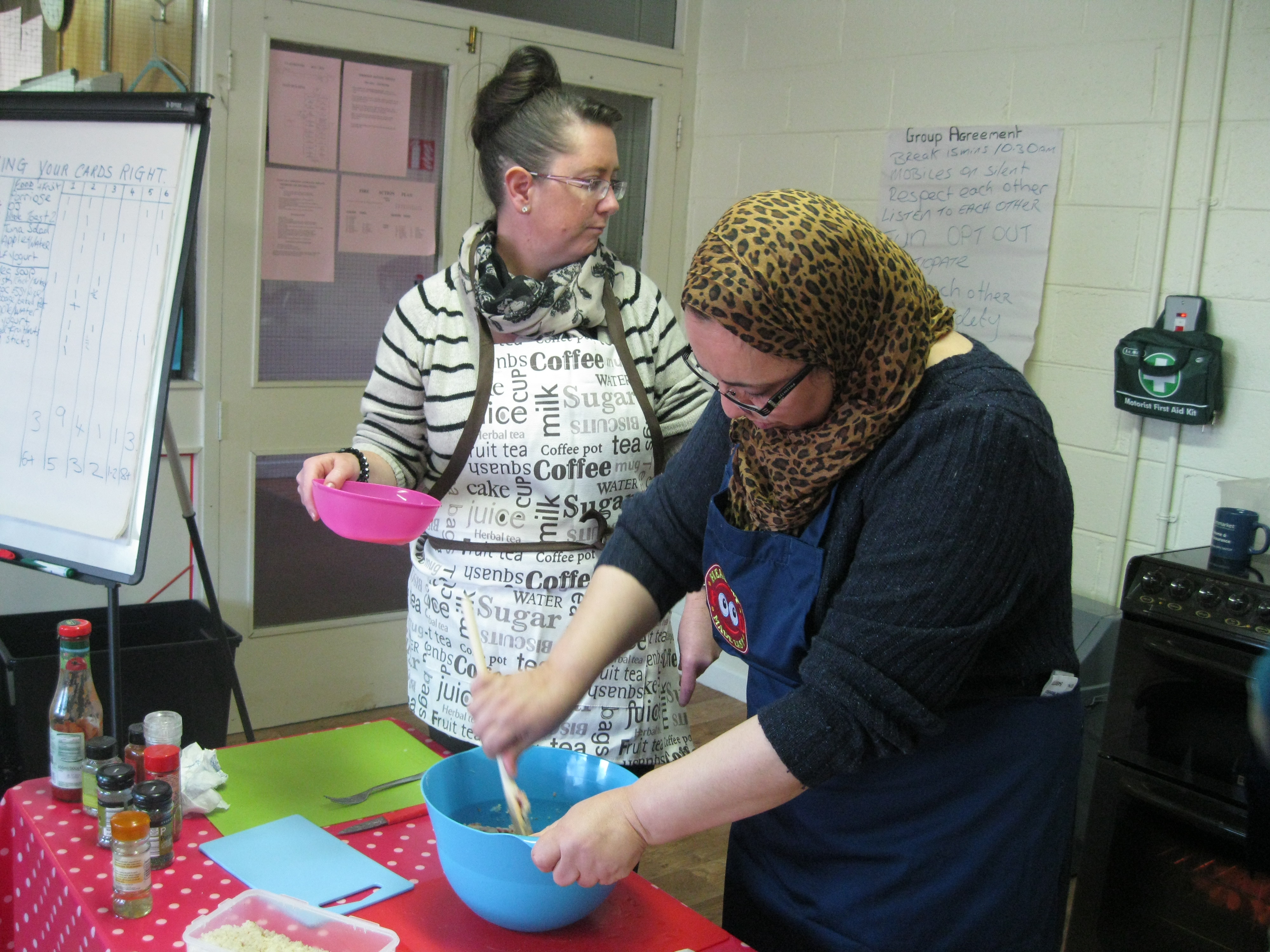
- Healthy Food Made Easy
- Computers
- Parenting classes
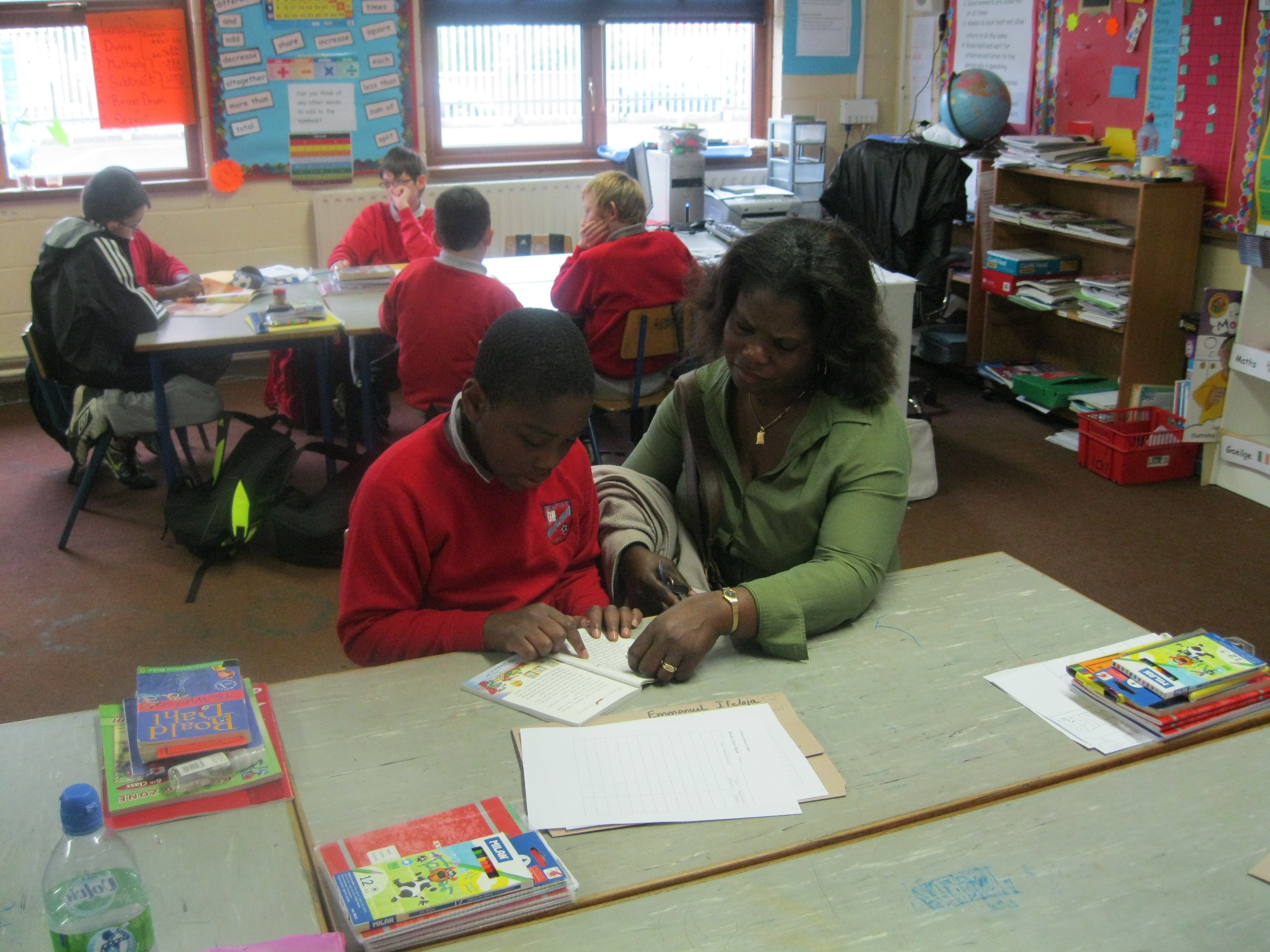
- Paired Reading
- Drugs Awareness Morning
- Irish Classes
- Maths Classes
- Beauty Therapy
- Help with reading and spelling literacy class
- Maths for Fun
- English Speaking Classes
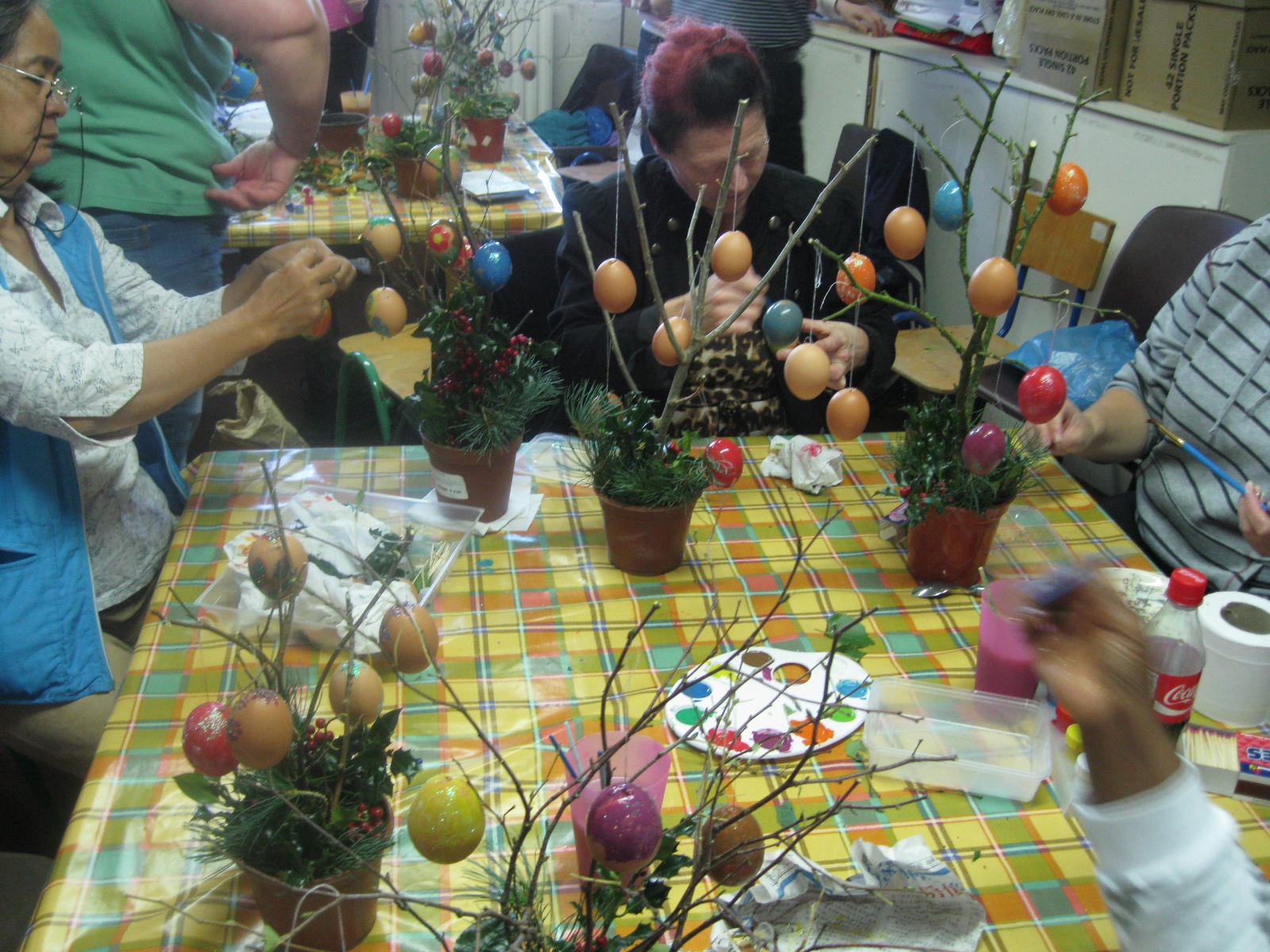
- Flower Arranging
- Jewellery Making Class
- Knitting & Sewing
If you’re interested in any particular class, just tell us—Caitríona Ní Dhuill is the Home School Community Liaison and she’d love to hear from you and talk with you.

You Are Invited…
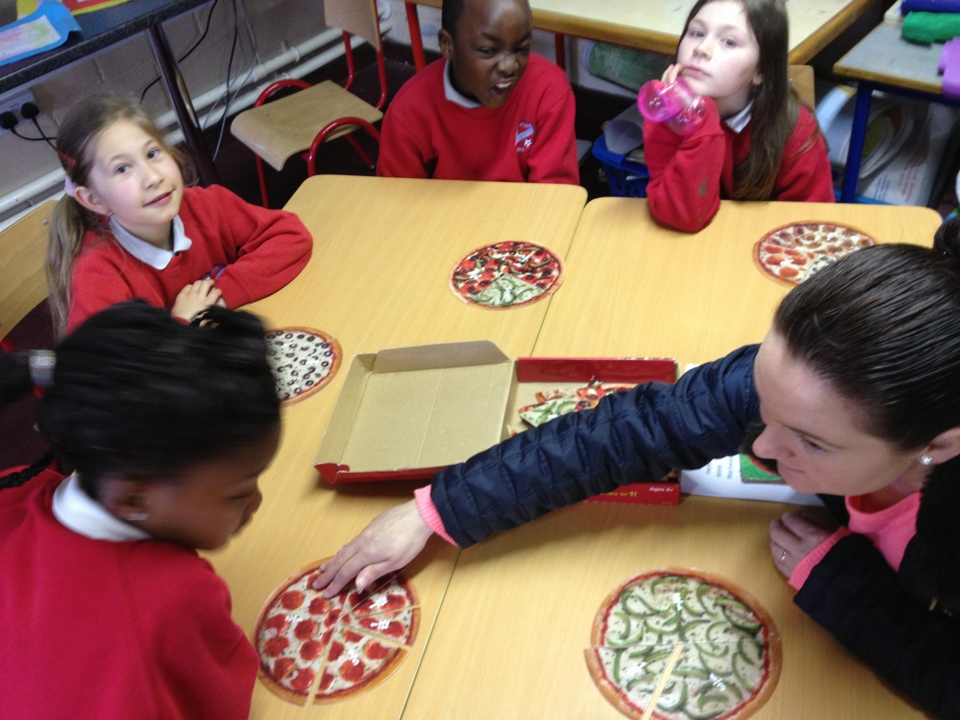
Parents are invited to school assemblies and there is tea/coffee served afterwards
Parents Association…
Talbot SNS has a vibrant Parents Association in school. They meet once a month (usually 1st Wednesday after staff meeting) and they support the school in many areas. If you’d like to join, please do! We’d love new members.
- School policies
- School Concert/ Clover project/ Bookfair
- Fundraising – Christmas Bazaar, Childline Breakfast morning, Coffee Mornings
- Personal Accident Insurance Scheme
- Sports Day – Supplying drinks
- …
Please read our All-Inclusive Parents Association Constitution
You and Your Child’s Social, Personal and Health Education (SPHE)
You might find the following resources helpful…
- The Parents page of the Stay Safe Programme (a programme that teaches your child personal safety skills)
- A pdf booklet called ‘Busy Bodies’ prepared by the HSE for parents of children in 5th/6th class regarding RSE (relationships and sexuality education)
- A 2018 pdf booklet prepared by the HSE to help parents talk to their children about RSE; it’s called ‘Talking to Your Young Child about Relationships, Sexuality and Growing Up’